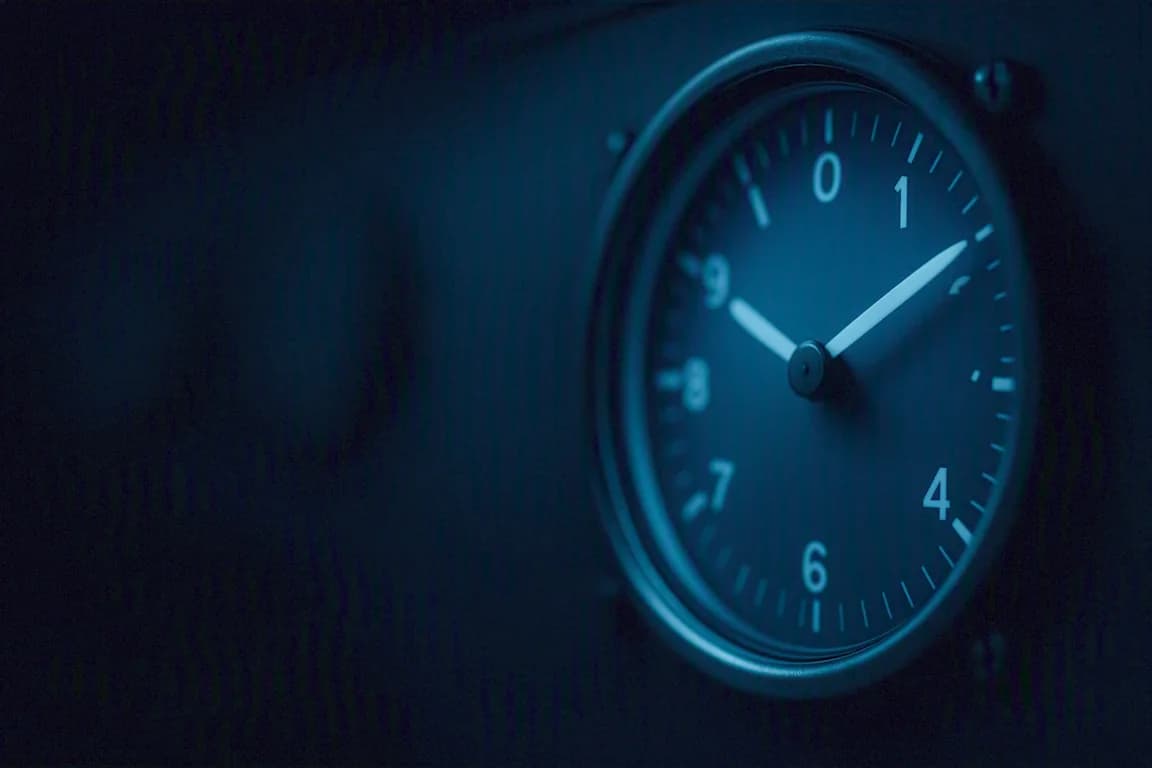
An altimeter is a barometer in disguise. It doesn't measure height directly: it measures pressure, and converts it to a vertical distance by assuming a standard atmosphere. The whole topic of altimeter setting comes down to one question: what reference pressure are you counting from?
One idea: choosing the zero
You dial a reference pressure into the Kollsman window. The altimeter then reads the vertical distance between you and the level where that pressure exists.
| Setting | Reference pressure | What the instrument reads | Called |
|---|---|---|---|
| QNH | Pressure reduced to sea level | Altitude | Altitude |
| QFE | Pressure at field elevation | Height above the airfield | Height |
| QNE (standard) | 1013.25 hPa (29.92 inHg) | Flight level | Flight level (FL) |
QNH: what you fly with en route
QNH is the pressure that, once set, makes your altimeter read your true altitude above mean sea level: the number that matches the terrain and obstacle elevations printed on your chart. It's what ATC gives you on initial contact, and what you keep set for the climb, cruise, and descent until you reach the transition altitude. It is also the pressure reported in every METAR (see how to read a METAR).
Remember: QNH is airport-specific. Request an updated QNH from each station you pass, especially in changing weather, since a stale setting drifts your indicated altitude away from your true altitude.
QFE: height above the runway, not altitude
QFE zeroes the altimeter at field elevation: on the ground, at that airfield, the altimeter reads zero. It's mostly useful for circuit work at a single airfield, where "height above the runway" is the number a pilot actually wants in the pattern.
QFE has a real limitation: it's specific to one airfield's elevation. Carry it across to another field, or forget to reset it, and your height readout is simply wrong. Most European operations default to QNH throughout, including in the circuit, so check your local procedures.
QNE: above the transition altitude, everyone reads the same standard
Above the transition altitude, every aircraft sets 1013.25 hPa (29.92 inHg) regardless of actual pressure at the surface. This is what turns an altitude into a flight level: FL95 isn't a real altitude above sea level, it's a reading on a common, arbitrary standard that every aircraft shares, which is exactly the point. Vertical separation between aircraft only works if everyone is measuring from the same reference.
Going up, you cross the transition altitude and switch to standard (1013.25 hPa): altitude becomes flight level. Coming down, you cross the transition level and switch back to the local QNH: flight level becomes altitude again. The exact altitude at which this crossover happens depends on the airspace and the current pressure; it's published for each aerodrome and needs to be briefed before the flight.
What this changes in the air
Three habits matter more than the theory itself:
- Confirm QNH on every frequency change: an old QNH is a silent altitude error that grows with time and distance from where you last obtained it.
- Know your transition altitude and transition level for the airspace you're flying in, since mixing them up means either climbing on the wrong reference or reading a flight level that isn't one yet.
- Never assume QFE is the default: ask, or check the airfield's published procedures, before you rely on it in the circuit.
The rest is vocabulary. Once the zero-point logic is clear, QNH, QFE, and QNE stop being three things to memorize and become one idea applied three times. For how this fits into the full syllabus, see the subjects of the PPL theory exam, and practise with our PPL theory preparation.